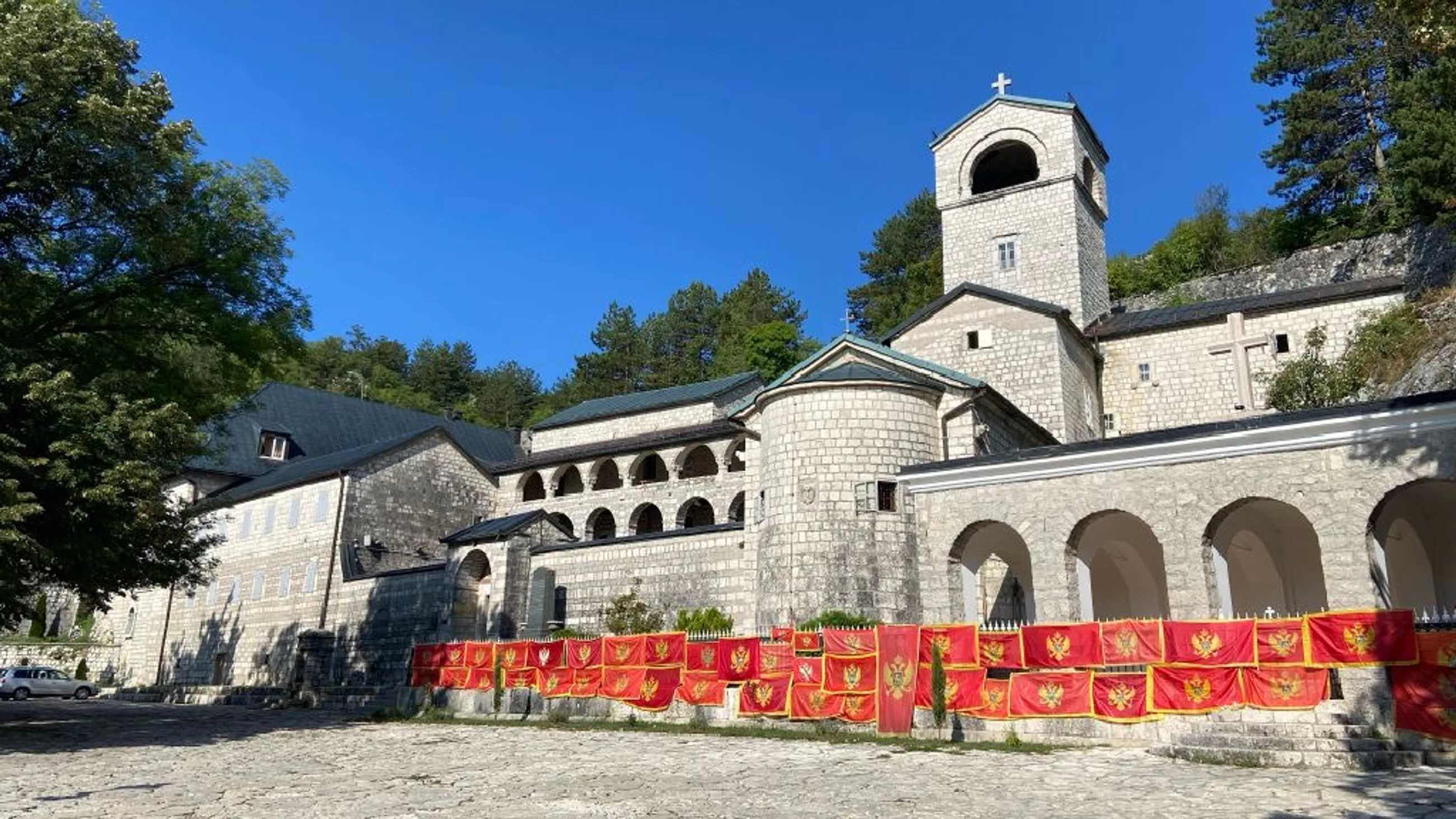
Cetinje is where Montenegro keeps its history. The old royal capital sits in a high karst valley below Lovćen, founded in the 15th century and still, formally, the country’s honorary capital. After the coast’s beach clubs and marinas, its quiet streets of former royal palaces and faded foreign embassies feel like a different country, which is rather the point.
The sights cluster within an easy walk of each other. Cetinje Monastery is the spiritual centre, guarding relics that draw pilgrims year-round. King Nikola’s Palace, now the Royal Museum, preserves the endearingly modest court of Europe’s last operetta-scale monarchy, and the National Museum of Montenegro spreads the country’s art and history across several historic buildings. Between them, look for the plaques on ordinary-looking townhouses: many were embassies when this valley hosted the capitals of Europe.
The town itself is low-key, and that is its charm. It sits noticeably higher and cooler than the coast, pleasant when Budva is baking, and a half day covers it comfortably unless museums are your whole trip.
From Budva it is 32 km, about 45 minutes by car on the inland road, and regular buses make it one of the easiest interior trips without a car. The natural combination is Lovćen: the national park and the Njegoš Mausoleum rise directly above the town, so most drivers and many tours do both in one loop.